Sunday, May 31, 2020

Great Basin Carshops

Ah, feel that in the air? It's springtime, and the weather outside is just beautiful. It's also still full of the dreaded Itus known as Covid19. Since the quarantine is still in effect, I've turned to a number of projects that have been sitting on the back-burner.  

Great Basin Carshops is a product line started by my friend Josh Bernhard. They provide lettering for 19th and early 20th century model railroaders. What makes their products unique is that all prototype artwork is traced directly from photographs, lettering diagrams and drawings to provide an absolute accurate letter-style. He offered me a set of his decals to try out and sent them to me, because he's an awesome lad.  

I could have just slapped his decals on any old kit. However, I decided that I wanted a unique car for a particular set of decals he offered. More on that set later and what makes them interesting. 

Open platform boxcars where pretty common in the Northeast prior to 1870s. With the NYNH&H, The The Boston, Hoosac Tunnel and Western Railway, O&W, L&M, and many others counting them among their rank. I started this kitbash atop a Mantua flat roofed passenger car frame. Taking the body and cutting the sides off but leaving the ends in place. New sides where made from crescent board that I scribed and cut. I really like using crescent board due
to it's ease to cut, ease to scribe with an X-acto blade, and it's ability to take varnish, paint, and sealants very well. New end railings were made from brass, a roofwalk, and a stemwinder handbrake round out this car. The car is not equipped with airbrakes. Mostly because I couldn't find the appropriate K-brake casting. This will change once the small box full of them that's floating around my workshop turns up. 

For this car, I chose the "Wickham Whale Oil Company" decals. 

Now, a little context this these. In 1890, the Utah Enquirer published an article titled Whales in The Salt Lake. According to the article, two juvenile Australian whales, one female and one male, were “planted” in the Great Salt Lake in 1873. 


According to the story, James Wickham imported them and commissioned special rail cars filled with seawater to transport the whales from San Francisco to the lake. His intentions being to start a great basin whale oil industry. Mr. Wickham “planted” the whales in a small bay with fencing he installed to keep the animals corralled. Much to his chagrin, the whales broke free and swam to deeper waters. Six months later, an associate of Mr. Wickham’s spotted the whales not fifty miles from their intended home in the Great Salt Lake. 

Of course, the whole whale of a tale is fiction. However, the tale had rooted itself so deep that today there is a Great Salt Lake Whale Watch Society, and a commemorative plaque placed at the location of the 'planting'. 


This set of decals represents a "what if", based on real private owner boxcars. With operating and reporting marks traced from prototype sources. The packaging is nice, and include a little leaflet with the decals both explaining prototype information (In this case, the story behind the Wickham Whale Oil Company) which is a very nice touch. The decals are of very high quality. You will have to cut them as close to the lettering as you can, as unlike the Microscale decals, these are built atop a single paper sized layer of film. 


Going on the car, working time is quick but effective. I had no problem moving the decals into position with a brush. The only complaint I have is that one of the decals actually had a small printing defect in it. One of the Master Car Builder markings had the lettering smudged. However, it was small and didn't effect the overall look of the decal set. A little bit of weathering covered it, and the defect did not appear again on any of the other sets. 

Overall, I give this product a solid thumbs up. Looking forward to more offerings. 


Check out out the offering made by Great Basin Carshops. They have a lot of promise, and I'll be returning to them for sure in the future. 


Tuesday, May 19, 2020

Tichy Arch Bar Trucks


The archbar truck was the most commonly found truck during the 19th century. They were composed of pressed steel and bar components that were bolted together and could be found on 40 and 50-ton capacity freight cars. Although they worked well, archbar trucks required a lot of maintenance. The bolts that held them together tended to work loose with the shocks and jolts of heavy operation and would require frequent tightening. They were gradually replaced by more advanced designs starting in the 19-teens. Eventually being banned from interchange service entirely in 1940.

In the past, I've used the MDC/Roundhouse archbar on most of my builds and cars. As I happened to have had access to a large stockpile of these, and most of the roundhouse cars which at one point made up my fleet came with them stock. However, as time went on, these started to become harder and harder to find and my own stock pile diminished. 

Both Kadee and Tichy offer an arch-bar set that comes as a pair of trucks. Tichy's come as a kit, while Kadee's are ready to run. I decided to snatch up a number of the Tichy sets as these can be modified to make a broad variety of truck styles. Including the body-hung brake beams since the brake-shoes are a separate part and don't need to be placed in between the wheelsets. I also like that the journal box covers are separate parts. So I can model a few either ajar, or cocked on their hinges. (Darn lazy carmen.) 

Each truck comes on it's own sprue. Included are a number of nylon bearing caps (thankfully Tichy was smart and kind enough to include some extras...for the inevitable cut that send one spewing off into the ether.) as well as the side frames, center bolster, and brake-shoes and beams. The finely molded styrine is easy to cut, and the directions simple to assemble. 


I like to build a number in quick succession. The brake-beams as provided slot into the bottom of the bolster after the truck is anchored to the car. So, unless you are ready to place the truck onto it's car as soon as it's finished, you will have to hold off on this final piece until you are ready.

Overall, a fine product from Tichy and one which I now have in large number thanks to the low cost. 


 If one is interested in this product, the kits can be obtained direct from Tichy or you can order them in bulk from Train Life

(Please note I am not associated with these companies; links are provided for modeler's convenience and not sponsored.)

Sunday, May 3, 2020

Morning In The Shops

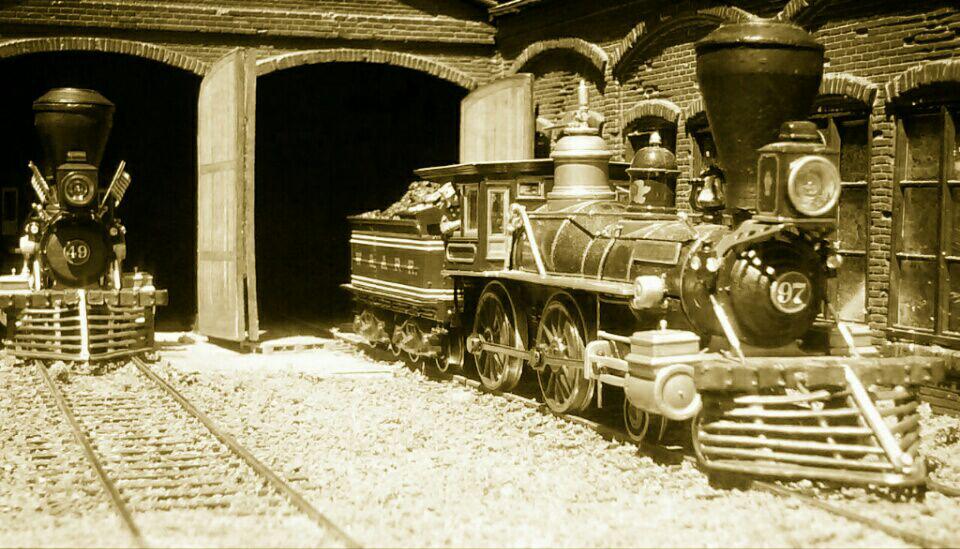
With Covid19 keeping us all home on these beautiful days, I started going through some of the photos taken on my old Atlanta Locomotive Works Diorama. I built the scene originally as a place to take photos of my locomotive projects. However, rebuilding it to include a turntable is what set me off on my modular layout build. 

Just for fun, lets wind the clock back and take a look at the Atlanta Shops. 


 As far as models go, the scene was very small. It was built on a 2x1' foam base with wood side walls. The shop building itself was made from spare Revell "Superior Bakery" wall segments. The same wall segments that would go on to be sourced for the Marceline Roundhouse. There was very little interior detailing. Rather just shapes painted black to give the impression of size and mass. 


The diorama was easy to take outside and pose equipment on. These photos are rather old, and show some of these models in prior shapes and detail packages. Some models, such as the Telegraph, have been rebuilt entirely into new locomotives. 

Still, it helped to take one back to sunny summer days. When the air was full of smoke and cinders. 


Looking at these old photos builds enthusiasm for the current projects. The new layout will be far more then just a diorama, and hopefully scenes like these will be seen again on the W&A RR.

Sunday, April 19, 2020

The Kipcha

I've owned this Bachmann Spectrum high boiler ten wheeler for almost 7 years. This model has the distinction of being the first sound equipped steam locomotive I ever owned. Equipped with a Tsunami medium steam decoder, it's sound system is acceptable at best. The B-mann claims no particuler prototype for this model other then being a representative of Baldwin Locomotive Works designs of the early twentieth century. Its size and proportions indeed reflect that era. The locomotive retains the slide-valve cylinders of the era when it was supposedly built, but has more-modern Walschaerts valve gear, a MASSIVE USRA tender, electric lighting, and a steel cab which as stock suggests a locomotive that was modernized in the 1920s or later, and may have run into the 1950s. 

The locomotive as she appeared under a previous rebuild.


When I did my original backdating upon purchasing the locomotive, the first thing I did was alter the tender. I got rid of the USRA tank, and instead cut apart a Mantua ten wheeler tank from their Sierra Railroad #3 model. The new tank went on the original frame, and was further detailed. Over the years, the locomotive lost all of the modern detailing, such as the cooling coils for the air lines, the Walschaerts valve gear, and a box headlamp found it's way atop the boiler.

She has carried three names over the years. First named “Enterprise”, she later gained the name “Vitani”, and finally “Scamp.”

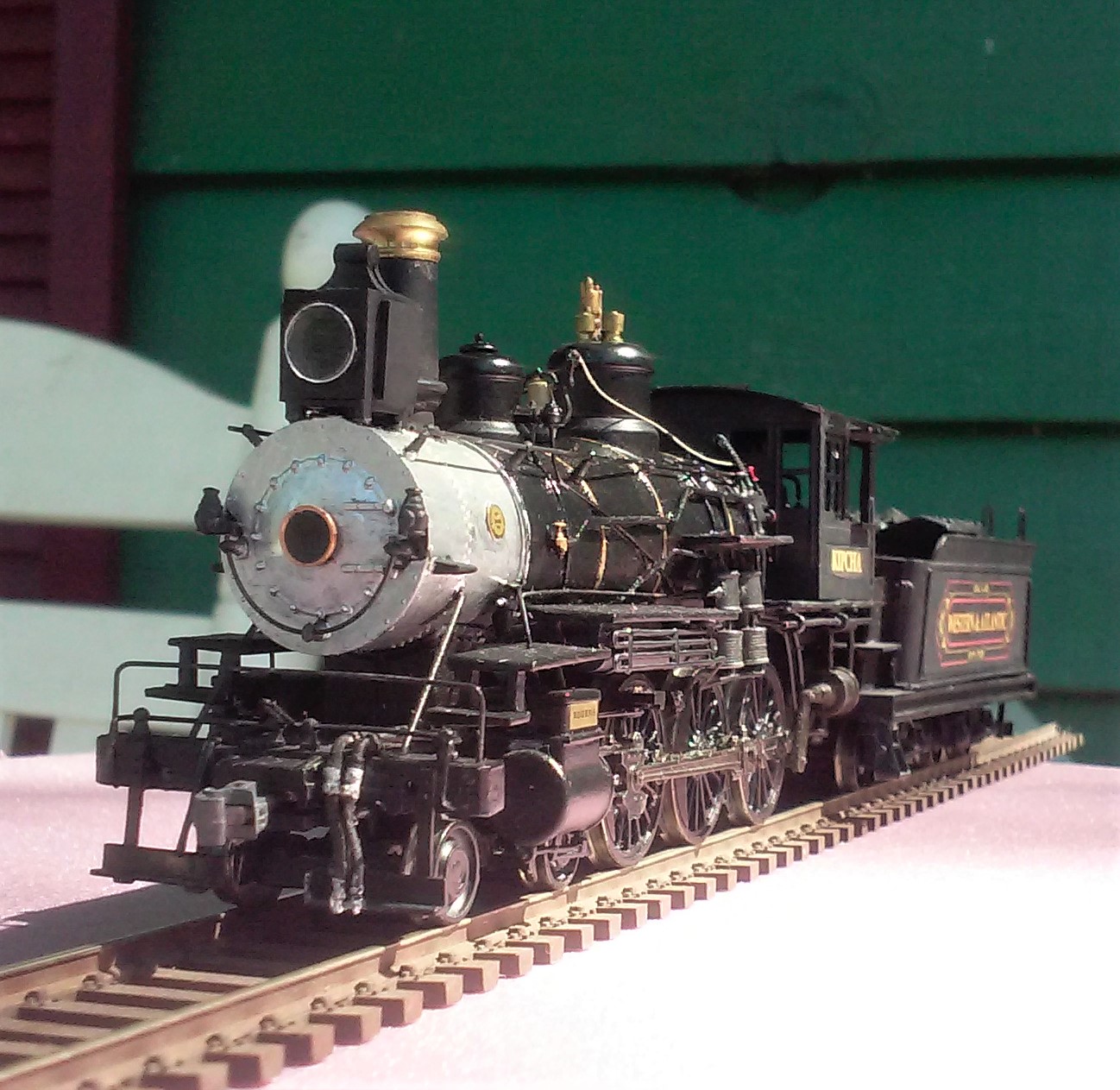
Kipcha, looking spic and span.
Mechanically, this locomotive has been a very reliable performer. Never missing a beat, nor giving me any real trouble. However, she is starting to get one in years, and a small quirk has started to emerge where if the locomotive is left to sit for an extended period of time, as she often does in my display case, the decoder doesn't like to respond to commands properly upon the first run. However, this quirk vanishes after a few rotations of the drivers. As well as vanished completely if the locomotive is run regularly. She has been slated for a new LokSound Version 5 decoder.

In the meantime, the locomotive was starting to look rather shabby. So, looking for quick projects to do while I sit at home hiding from the Big Bad Itus, I felt it was time to pull her out of service and go through her with a fine toothed comb. The locomotive underwent a full servicing that involved the removal of the boiler and cab. The boiler may be removed by unscrewing four screws, one between the cylinders and three at the rear of the frame and under the cab. The two deck braces must also be removed from the sides of the smokebox. The cab can be removed by releasing two screws and loosening the upper ends of the rear handrails. Use care to avoid damaging the piping and railings running into the cab's front wall.

The motor and flywheel are enclosed in a metal housing that fills a cavity in the boiler casting. A cogged belt drives a worm shaft that runs horizontally below the motor, and the worm drives a worm gear on the main (second) driver. All moving parts where cleaned and greased. The old paint was stripped, and the old detailing removed. A new wood MDC cab was fitted to a newly detailed and painted backhead. Finally, a new coat of paint and new paper decals were applied to the cab and tender. The box headlamp was scratch built over the end of the LED post.
As a last touch, she received a new name to go with her new look. “Kipcha”, follows my railroad's tradition of naming locomotives after characters from the fantasy book series “The Sight”. A tradition that goes back to my Middle School days.

Hopefully she will give me many more years of pleasurable operation.

Sunday, March 29, 2020

The 2-6-0 Project. Part 1


Steam locomotives are impressive, captivating, ingenious, complex, and dangerous devices all wrapped within a single frame. Nothing else in railroading has ever been quite as alluring. 

Prior to the turn of the last century, the 4-4-0 class of locomotive was perhaps the most successful, and most common wheel arrangement. These ran the gauntlet of design from colorful and gilded trimmed machines of the 1850s and 60s to the robust and
conventional units of the 1890s and the early 1900s.

According to Wes Barris' authoritative website, SteamLocomotive.com, there were around 25,000 of the little buggers manufactured from the mid-1800's through the following century. More then any single class of wheel arrangement before, or since. No surprise this class gained the name “American”.

The archetypical 4-4-0. Baldwin built. Circa 1870


Before I go any further, let's touch up on locomotive classes. On this blog, I toss around a lot of numbers. 4-4-0, 2-6-0, 4-6-0, and more. The technical term for this is the "Whyte Notation," developed by Frederick Whyte, which classifies a locomotive by its wheel arrangement. The system counts the number of lead wheels (non-powered, found at the head-end to negotiate curves), driving wheels (located directly under the boiler, providing all power and adhesion), and finally the trailing wheels (also non-powered these are located near the cab for support of the firebox and weight displacement), all of which are separated by dashes. 


The 4-4-0 in all it's mechanical glory
The American's Whtye Notation is broken down as follows: "4" lead wheels (two axles), "4" drivers (two axles), and "0" trailing wheels. Thus...a 4-4-0. (And the “0” is pronounced as “oh” not “Zero”. If you see a friend pronouncing a class as “four, four, zero”, and not “four, four, oh”...well, you need better friends. ;-) )


The iron horse continued to grow in an effort to meet demand and as boiler building technology and metallurgy allowed larger boilers and stronger frames to become available. Other popular 19th century wheel arrangements included the 4-6-0 Ten-Wheeler, 2-6-0 Mogul, and 2-8-0 Consolidation. These successful designs gave way to the technologically advanced variants of the post-1900 period.


A roster of the W&A RR Circa 1862. All 4-4-0s.
So far, the motive power fleet of my W&A RR consists of six 1860s-70s 4-4-0s, one 4-6-0, and one 1890s 4-4-0. Historically, the real life Western & Atlantic mostly ran with 4-4-0s, although a batch of Baldwin 4-6-0s was obtained in the 1880s. Part of why I wanted to model a fictional version of the W&A was to expand upon this fleet with "could have been" pieces of motive power.


Two wheel arrangements I wanted to tackle were the 2-6-0 Mogul, and possibly the 4-8-0 Mastodon. Both projects I put off as I worked on perfecting the 4-4-0s. Part of the reason being that there really aren't good representations of these wheel arrangements available as ready-to-run 19th century locomotives. There are some older models, such as Mantua open frame motored varieties, all based on the movie diva-I mean-star, Sierra Railroad #3. However, these older models have very poor molding, open frame motors, and the amount of work to re-motor them and deal with their running issues would be paramount to building from scratch.
The typical 1870s 2-6-0. As built by the Brooks Locomotive Works


There is the Model Die Casting/Roundhouse 2-6-0 “Old Time” model. The kit was pretty common from the 70s on through the 90s, and to this day you can find dozens on ebay. 

An MDC 2-6-0 with the fat boiler that was present on all MDC old timers.
I had never really liked the MDC/Roundhouse models because they were kind of odd— odd-drivered, with a high-mounted, straight, fat boiler. (The same boiler across the line of available models) It was hard to find a prototype that resembled it. Definitely not a typical 2-6-0 for my 1880–1890 modeling period.


John Otts, owner of the wonderful Miskatonic Railroad published an article on building his own 2-6-0 using the MDC/Roundhouse 2-6-0. His site is a gold-mine of information, and well worth a look. This got me thinking about the possibilities in the MDC frame.
Marco's 2-6-0 project loco


Then, as I did research into the idea, my friend Marcos Hizizal started working on his own 2-6-0 project by combining a MDC/Roundhouse small driver 2-6-0 frame and running gear with an old AHM 4-4-0 wagon-top boiler and cab. He nursed and developed the idea enough to get a model up and running of his own design. Watching him, and witnessing his trial and errors gave me enough thought to attempt a similar style bash on my own. 


I started out by obtaining a second hand MDC model from everyone's favorite online auction website. It came as "new-old stock", and had never been out of the package. I pulled the model from it's packaging to instantly discover that it had an odd knocking noise coming from the mechanism, and that it ran with a clear "thump". After much diagnoses, takeing things apart and putting them back together multiple times, some fowl language, and a beer, it turned out it had a cracked spur-gear that needed replacement. 

Well done MDC, well done.


I already had a AHM 4-4-0 boiler and shell, from a model that I picked up second hand. While Marcos took the original 2-6-0 and worked some voo-doo magic to rebuild the spur-gear.


The general idea of the build was to graft the AHM boiler to the MDC frame. This required a little butchering on behalf of the AHM boiler. I stripped the boiler of all components and paint, before giving it a good solid cleaning. I massaged the boiler so it would snuggle down more on the frame, and rebuilt the running-boards out of styrine so that they lost the "diamond plate" pattern that was cast into them. 

Test fitting the frame and boiler.

While this was happening, Marcos determined that the spur-gear was a loss, and quickly magicked up a 2nd MDC 2-6-0 doner. I assume he had to sacrifice a virgin and a lamb to do so. Either way, I'm indebted to him for popping another MDC out of then air. Once I had the MDC loco back, I disassembled the model down to it's frame, removing the pilot and lead truck. A new pilot would be fashioned and I added a new lead truck using a the old MDC lead truck assembly with a NWSL 26" flush end wheelset. To help with weight, a stick on lead weight was added between the frame. 


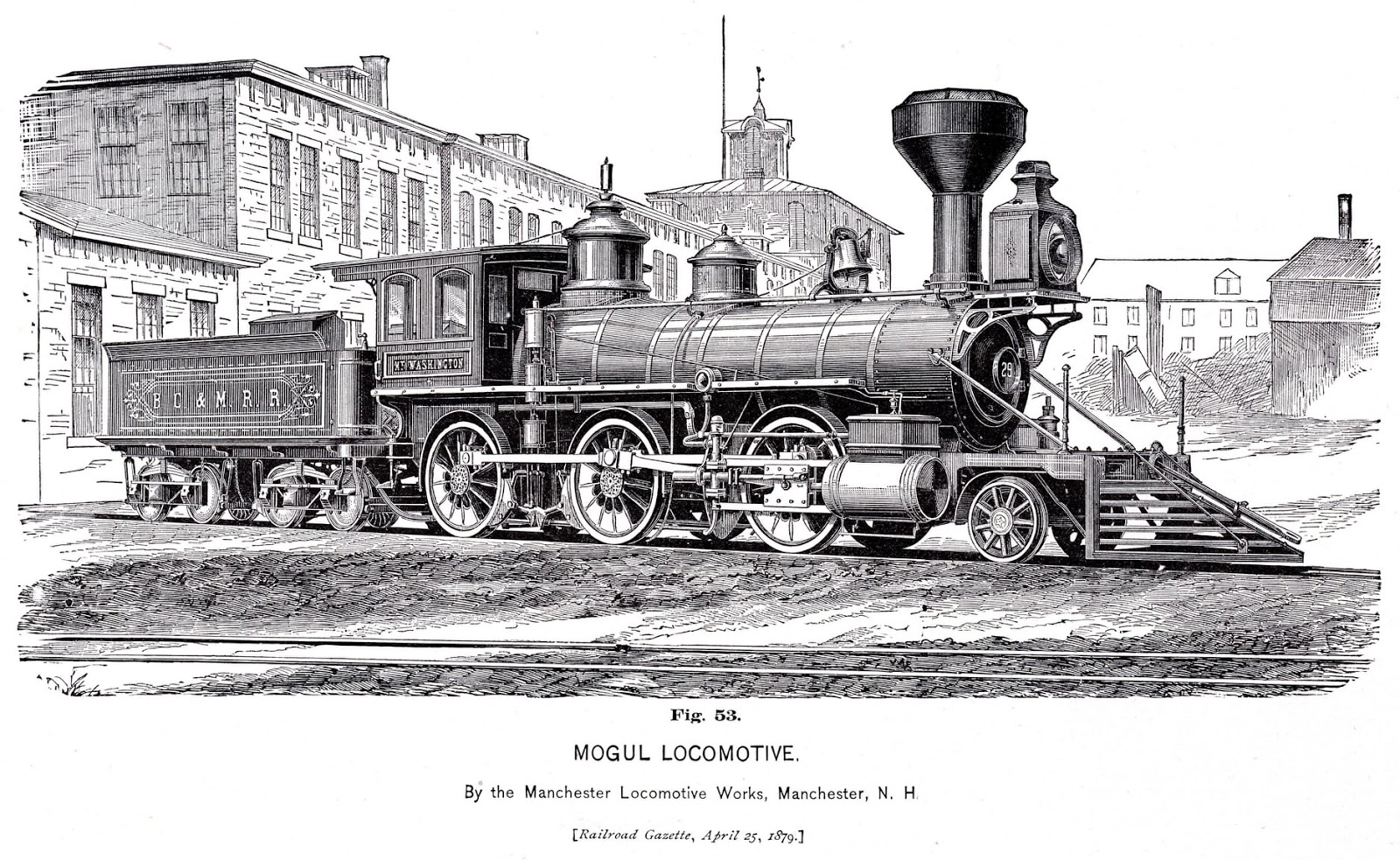
 The locomotive has a real Civil War look to her thus far. Which I really do like. I've started aiming for a locomotive that looks like a Manchester or Rogers product of the late 1860s or early 1870s. The big balloon stack helps to hide more weight. There is still a lot of work to be done. Such as a tender to scratch build, wiring to be done, and a decoder and speaker to fit. 

The boiler and runningboards


The weight between the frames.


Freshly painted cab!


More on this project as it develops...


The Library


Here you will find a quick link to the literature and fan-fiction that forms the backbone of the W&A RR and it's projects. 


Lady and the Tramp, The Lion King/Guard, Oliver & Company, Princess and the Frog, Talespin, and 101 Dalmatians are copyright the dude with the mouse ears and the big castle. This is an 'Alternate Universe' and takes liberties with the movies and the canon from which it’s set around.


A Western & Atlantic short story. Showcasing the first time Lady and Tramp truly met each other.

Based on the same scene from the first film. Originally a one-shot written for a prompt, I held onto it for a while thinking I could include it in something else. But in the end, it stands on it's own pretty well.


Lady and Tramp have a wonderful life together. Their kids have moved out and found employment, and both are looking forward to a quiet life focused on each other and a hopeful retirement following their jobs on the railroad. But when a mysterious Shadow Man places a curse on Lady, will bad luck and ill fortune follow her to her grave?


It's a cold night when the Tramp answers a knock on the door. He's been called to pull a shift in the yard, by himself for a change. What he finds upon arrival is a tough situation. The W&A's Chief Mechanical engineer and a bum busted up locomotive who is far past her prime. Can they handle the oncoming emergency with their lame loco?


It's a wet and stormy night when Lady and the Tramp are assigned one of the railroad's crack overnight passenger trains. With a private car making their train overweight, and an efficiency inspector along to judge them, this will prove to be a tough night that will test their skills and patience. 
 

Vitani has been harboring a secret from Scamp and Angel. She has grown to discover unrequited feelings for the young male railroader. With Angel by his side, and clearly a part of his life, what use is it to try? That is, until she finds herself an opportunity to make Scamp her own, and all she has to do is slip a little bit of something special into his drink.

The Alley By The Railyard (W&A Story)

Marceline Georgia, October 1879

The frightened cocker spaniel pressed her back against the rough wooden fence that blocked the alleyway. Her heart hammered into her chest, which was rapidly rising and falling as she felt adrenaline serge through her body. The silver set of handcuffs hung limply from her right wrist, swinging back and forth in motion from her failed previous attempt to climb the fence. All which that accomplished was a great rip in her skirt. She wanted to curl into a ball and vanish into the earth. She had never been in this area of town. Far into the industrial blocks beyond the trainyard. Brick dirty walls towered over her on each side of the dank alley, and if it wasn't for the handful of barrels and creates that stood in neat piles awaiting delivery, she would have assumed it was abandoned. The narrow size of the ally made the approaching gang of ruffians all the more threatening as the marched in side by side in the shadows.

“Hey there sweetheart,” The big thug said as he approached, stepping through the entrance of the alley. He and his two companions leered as they came closer to the frightened young woman. “We an't gonna hurt chu. Much...wasit again? Lady?” a rough chortle “What a nice name for such a delicate thing.”

The tan furred spaniel was too frightened for words. Her eyes darted around as she looked for a way out. Suddenly, a shrill whistle pierced her ears. The thugs looked over their shoulders as a young railroad mutt called to their attention. He stood with a scowl across his maw in the bright light at the entrance behind them, a brakeman's club clutched in one hand. No doubt he had seen her being pursued across the trainyard before she ran into this alley. The three thugs turned around, eyes narrowed and canine ears flat against their heads. Their hands balling into fists, threatening.

The fight was quick and surprisingly one sided. The cocker watched, mouth agog and eyes the size of dinner plates as the three ratted mongrels charged the railroad dog. With one good swing and a sickening crack, he took out his first assailant with the brake-club. There was a tangle of limbs, the grunt of a punch finding a stomach, and a hiss as the railroader received a knock to the shoulder. A barrel was knocked over and rolled across the alleyway. Another swing of the brake-club, and the other two thugs decided that whatever Lady was worth, it wasn't enough to end up with a cracked skull.

The mutt chased all three of them, two holding busted shoulders and one with a hand over his head, to the entrance of the ally. Then stopped as they vanished into the dust, with only a cocked muzzle and a satisfied snort given to them. Turning back to her, she realized that she recognized him as the same railroader who she had seen giving a smile and wave when she watched trains at the depot. She kept her back pressed against the wooden boards, unable to stop shaking. Her heart continued to hammer in her chest as her adrenaline slowly began to come down. He began to slowly approach her. Stopping only to retrieve a flatcap that had been knocked off his head in the struggle. His stocky tail fluttering.

“Hey, Pidge what are you doing on this side of the tracks?”

The spaniel looked up at her savor, unable to hold back the moisture gathering in the corner of her eyes. He stopped a few feet ahead of her, leaning the brake-club against the brick wall. His light gray fur was disheveled from the fight, and she could see now that he had gained a bruised eye in her defense. He cocked his head, looking her over, and placed his hands on his hips before a crooked smile split his handsome muzzle. She could see his eyes landing on the shackles that hung from one delicate wrist.

“Please, stay back!” She barked, holding a hand out in front of her, the one which didn't have a set of handcuffs dangling from them.

“No worries. No worries” He repeated, holding up both of his hands for her to see, before padding down his railroad overalls. Showing her that he carried no weapons other then the hickory stick that was now laying against the brick wall.

“No, don't come any closer!” Her voice went up in pitch, and his smile faded as he stopped walking. He raised his hands to show her he meant no harm. However, the fear and adrenaline from her recent encounter meant she was not taking any chances. “Stay away from me!”

“It's alright, they're gone. You're perfectly safe.” His voice was kind, soothing. “What are you doing here?”

Lady's eyes darted around the alleyway, looking for a quick escape. However, her vision began to blur as tears started to flow.

“I...I don't know,” she stammered, her will not to cry slowly disintegrating. One of her hands numbly rose to clutch and pull at an ear nervously. “It all went so wrong so quickly. I just had to run.”

A genuine look of concern crossed the mutt's face. He brushed a little bit of dust off his shoulder before reaching into his coverall pocket. Lady pressed herself even closer to the fence, recoiling as he reached into the pocket. Just because she had met him briefly once before, and seen him on his trains, did not mean she could trust him anymore then those bums who just tried to harm her. Her flinch did not go unnoticed, and as he produced a white handkerchief and handed it to her she started openly sobbing. She wanted to be at her home, wanted her parents to be there. How had things gone so wrong so quickly after they had left? One second she was looking over their newborn, her step brother, the next...

“Easy there Pidgin. That's some waterworks,” Though his words may have been playful, his eyes were deadly serous. “What happened?”

The spaniel slid down the fence, crumbling to her knees. The rough cobblestone that made up the floor of the alley was damp from a recent rainstorm. She kept crying and replied numbly; “I ran into them, and they grabbed me and when I got away they started chasing-”

“No, I mean...that.” He interrupted before pointing to the handcuffs. She looked up, suddenly feeling the urge the hide the shackles behind her back. He repeated; “What happened?”

She reached with her free hand and grabbed the handcuff, feeling a shudder roll through her. It was as if they were a tattoo that tainted her pristine female body. A mark of delinquency proclaiming her to be as Aunt Sara had proclaimed upon their initial placement, a criminal. Lady let out a hard shudder as she imagined the old battleship's angry stare, and the smug smiles of her two children, and it made her feel ill. Burying her face into her knees, hiding among the long red fur of her ears, she sobbed anew. She had worked so hard, going from a foster child to an adopted daughter. It just wasn't fair. She knew that no matter what, Aunt Sara's voice would be heard before her's. She couldn't bare the thought of Jim and Darling being told what a bad girl she was, and how they had made such a mistake in adopting her. Regardless if they believed Aunt Sara's twisted and altered version of the events or not, it was going to be a challenge to explain.

On top of that, having to run from the police! Sara had called the constable and she had been arrested! No doubt there was a warrant for her now. Having to run from then, she had nearly been hit by multiple carriages and a streetcar. Then, to run into those thugs! She had only gotten away from them unscathed because she had run into, by sheer coincidence no less, into the one railroad mutt who not only would recognize her, but had the courage to help. It was just too much to handle. Shuddering as she worked to swallow the last of her weeping, Lady looked up through her own cocker ears at the mutt. Oh, what he must be thinking of her! Sobbing like a child after having lifted not one finger to protect herself. So pathetic.

“Ah, you poor kid,” he said gently. “Take your time. There is no hurry.”

Surprised, Lady swallowed another sob that threatened to escape her. Sniffing, she pushed her ears away from her face. For the first time, she looked at him thoroughly. He stood frozen in his position after her delirious request, hands at his hips with the thumbs in his pockets. The look he wore was of complete concern, as if Lady was made of glass and could shatter at any moment. Taking a deep breath, she started to pull herself together. She was a proper young woman, who was trained to have manors, despite the less then desirable situation.

“I'm sorry I yelled at you.” She began, wiping away her tears with her sleeve before running her hands down her muzzle in an attempt to smooth out the ruined fur. Slowly, she began to rise to her feet. “I was just scared, I've never been...in a situation like that.”

She closed her eyes and shook unsteadily, still recovering from her collapse. Opening them again, she looked over and saw a gray hand held out to assist. Gingerly, she placed her own into it, and allowed him to help her stand. Her fingers seemed so delicate against his palm.

“Don't worry about it. Those morons like to hang around the railroad yard. Always trying to steal things from railcars sitting in the sidings. They talk the big talk, but as soon as a bunch of us railroad men show up they turn tail. Dumb too,” He chuckled, the corners of his mouth turning up in a charming smile. “As soon as I showed them the one-two, they faded like the cops were after them. If anything, I expect the yardlets to be pleased to hear one of us finally got to hit them with a club.”

Lady ran her hands through her ears, attempting to smooth out the fur. “But I don't understand. Is that why you came to help?”

The mongrel shrugged, Lady noting how his shoulders drop significantly. “Well, who knows what others out there would do to such a beautiful and classy girl such as yourself. Besides, I'm on switching duty. Saving some damsels just helps to lighten the mood.” His eyebrows arched in good humor, triangular ears perking.

The spaniel felt some of her tears and misery departing. Her chest grew lighter and a soft smile, light enough that it was almost invisible, grew across her muzzle. “Really?”

“Oh yeah!” he gave her an encouraging wink. Smiling through his towseld fur. There was a roguish charm that Lady couldn't help but find fascinating. “Cheer up little Pidgin. You mustn't be down-harden, you're with me! We'll see what we can do about ditching that hardware. Then you'll be right as rain.”

“You can help me get rid of these?” She asked, holding her hand out to present the handcuffs.

“You better believe it! You got yourself a true blue doer of all things mechanical!” He gave her an overly dramatic deep bow. “We'll go to the railroad's machine shop and get those off you. Then you can tell me what on earth happened.”

She looked into his brown eyes, full of warmth and energy with the slight twinkle of mischief. Then hoped beyond hope that she was making a good decision. Taking a deep annihilation to steady herself, she spoke. “Thank you, but what is your name, sir?”

His triumphant smile deepened. He was handsome, no question about that! She wasn't quite used to being around canine men her own age, much less attractive ones. She couldn't help but notice his fur. He was young, no older then a year or so then herself. However, his fur was unkempt and tousled, and his features sharp and strong. His muzzle full of whiskers. Suddenly, she found herself blushing.

“You can call me The Tramp little Pidgen.”

“Oh, well. Thank you Mr. Tramp. And my name isn't Pidgen, it's Lady.”

He gave her a crooked smile that made her blush hotter then she was comfortable with. “Really? That's a pretty name, however I kinda like Pidge better.”